
Magic Mushrooms vs Antidepressants Which Is Better for Mental Health in the UK and Europe (2025 Research Guide)
Magic Mushrooms vs Antidepressants: Which Is Better for Mental Health in the UK and Europe

If you’re wondering whether magic mushrooms or antidepressants work better for depression and anxiety, research in 2025 shows both can help—but in very different ways. Traditional antidepressants like SSRIs manage symptoms by altering serotonin levels over time, while psilocybin, the active compound in magic mushrooms, can trigger deep psychological resets that may last for months after just one or two guided sessions.
In the UK, Ireland, and much of Europe, psilocybin remains a controlled substance, but clinical studies at institutions such as Imperial College London and University College Cork have demonstrated remarkable results in treating resistant depression. Antidepressants, meanwhile, remain the standard prescription therapy due to their legal status and accessibility.
This post explores how both treatments work, what the science says, and what the future of mental-health therapy might look like across London, Dublin, Manchester, Berlin, Paris, and Amsterdam.
Antidepressants, especially Selective Serotonin Reuptake Inhibitors (SSRIs) such as fluoxetine, sertraline, and citalopram, function by increasing serotonin availability in the brain.
This gradual biochemical change helps improve mood regulation, reduce anxiety, and stabilise emotional responses.
Despite limitations, SSRIs remain a lifesaving option for people needing stable, regulated treatment monitored by healthcare professionals.
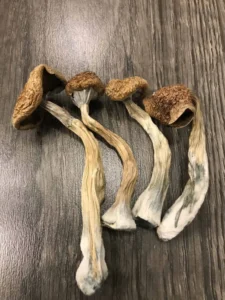
Magic mushrooms contain psilocybin, a natural psychedelic that activates serotonin 2A receptors in the brain.
Unlike SSRIs, psilocybin creates temporary neural hyperconnectivity, allowing suppressed memories and emotions to surface, often leading to a feeling of psychological release or “reset.”
Studies at Imperial College London, Johns Hopkins University, and Maastricht University have shown that psilocybin therapy can:
Patients frequently describe one or two sessions as “years of therapy condensed into a single experience.”
| Aspect | Magic Mushrooms (Psilocybin) | Antidepressants (SSRIs/SNRIs) |
|---|---|---|
| Onset of Action | Rapid (within hours) after guided session | Slow (2–6 weeks) |
| Duration of Effect | Long-lasting (weeks to months) | Continuous with daily use |
| Mechanism | Psychedelic neural reset, increased connectivity | Gradual serotonin regulation |
| Supervision | Requires guided therapy in clinical setting | Prescribed and monitored by GPs |
| Side Effects | Temporary anxiety, nausea | Fatigue, libido changes, withdrawal |
| Legal Status (UK/EU) | Controlled substance (research use only) | Fully legal medical prescriptions |
| Research Stage | Phase-3 clinical trials ongoing | Established standard therapy |
Participants often report profound insights, emotional breakthroughs, and new perspectives on trauma.
Brain-imaging studies show psilocybin quiets the default mode network, helping people break free from negative rumination loops.
For those with chronic or recurrent depression, SSRIs offer steady mood stabilisation, preventing relapses and supporting long-term recovery.
Emerging evidence suggests both psilocybin and SSRIs can promote neuroplasticity, allowing the brain to form new, healthier connections.
Psilocybin must be used only in clinical or research environments due to its powerful psychological effects.
In trials, participants are screened carefully and guided by trained therapists.
Antidepressants, while safe for most, can cause side effects when used without supervision or combined with alcohol or other drugs.
As of 2025, no EU country offers psilocybin as a licensed antidepressant, but momentum for legal medical frameworks is increasing.
Pharmaceutical companies in London, Berlin, and Zurich are working on synthetic psilocybin formulations under clinical supervision.
Predicted milestones include:
This could lead to regulated clinics across Manchester, Dublin, Edinburgh, and Amsterdam, offering guided sessions legally within five years.
While full psilocybin therapy remains restricted, scientists are exploring microdosing—sub-perceptual amounts thought to improve focus and mood.
Current findings show mixed but promising results in Copenhagen, Zurich, and London laboratories.
Researchers caution that more data is needed before public use is advised.
Surveys by YouGov UK and The Irish Times show rising public support for medical psilocybin.
Over 60% of respondents across London, Birmingham, and Dublin agree it should be available for treatment-resistant depression under professional guidance.
1. Are magic mushrooms safer than antidepressants?
Not necessarily—each has different risks and benefits. Psilocybin can trigger intense emotions if unsupervised, while antidepressants can cause dependency or side effects.
2. Can you combine both?
Combining psilocybin and SSRIs is discouraged outside research settings, as SSRIs may blunt psychedelic effects.
3. Will psilocybin become legal soon?
Experts predict limited medical access in the UK or EU within 3–5 years following phase-3 clinical approvals.
4. Do they treat the same conditions?
Yes, both target depression, anxiety, and PTSD, but psilocybin focuses on root causes, while SSRIs manage symptoms gradually.
This blog covers research, therapy, and wellness insights relevant to readers in:
London, Manchester, Birmingham, Glasgow, Liverpool, Dublin, Cork, Galway, Belfast, Edinburgh, Aberdeen, Amsterdam, Berlin, Munich, Paris, Lisbon, Zurich, Copenhagen, Oslo, Helsinki, and Madrid.
These cities are currently active in or adjacent to psychedelic research and mental-health innovation across the UK, Ireland, and Europe.
The debate between magic mushrooms vs antidepressants is less about competition and more about context.
For some, daily antidepressants provide reliable symptom relief and structure; for others, psilocybin-assisted therapy offers transformative insight that conventional medicine cannot.
The future likely lies in integration: combining the stability of antidepressants with the emotional depth of guided psychedelic therapy under legal frameworks.
As clinical science progresses, the UK, Ireland, and Europe are poised to redefine mental-health care—merging tradition and innovation for a more holistic approach to healing.
Magic Mushrooms vs Antidepressants: Which Is Better for Mental Health in the UK and Europe

1. Understanding Psilocybin Microdosing – What It Is and Why It’s Popular Psilocybin microdosing involves

Introduction – Answering the Question Directly If you’ve ever wondered how long magic mushroom effects
WhatsApp us